Studies & Safety

The Data Behind the Danger

This page documents the real-world hazard data that drove more than 20 years of product development — the settlement, the fines, the damage rates, and the code language that shaped Stub-EASE II™.
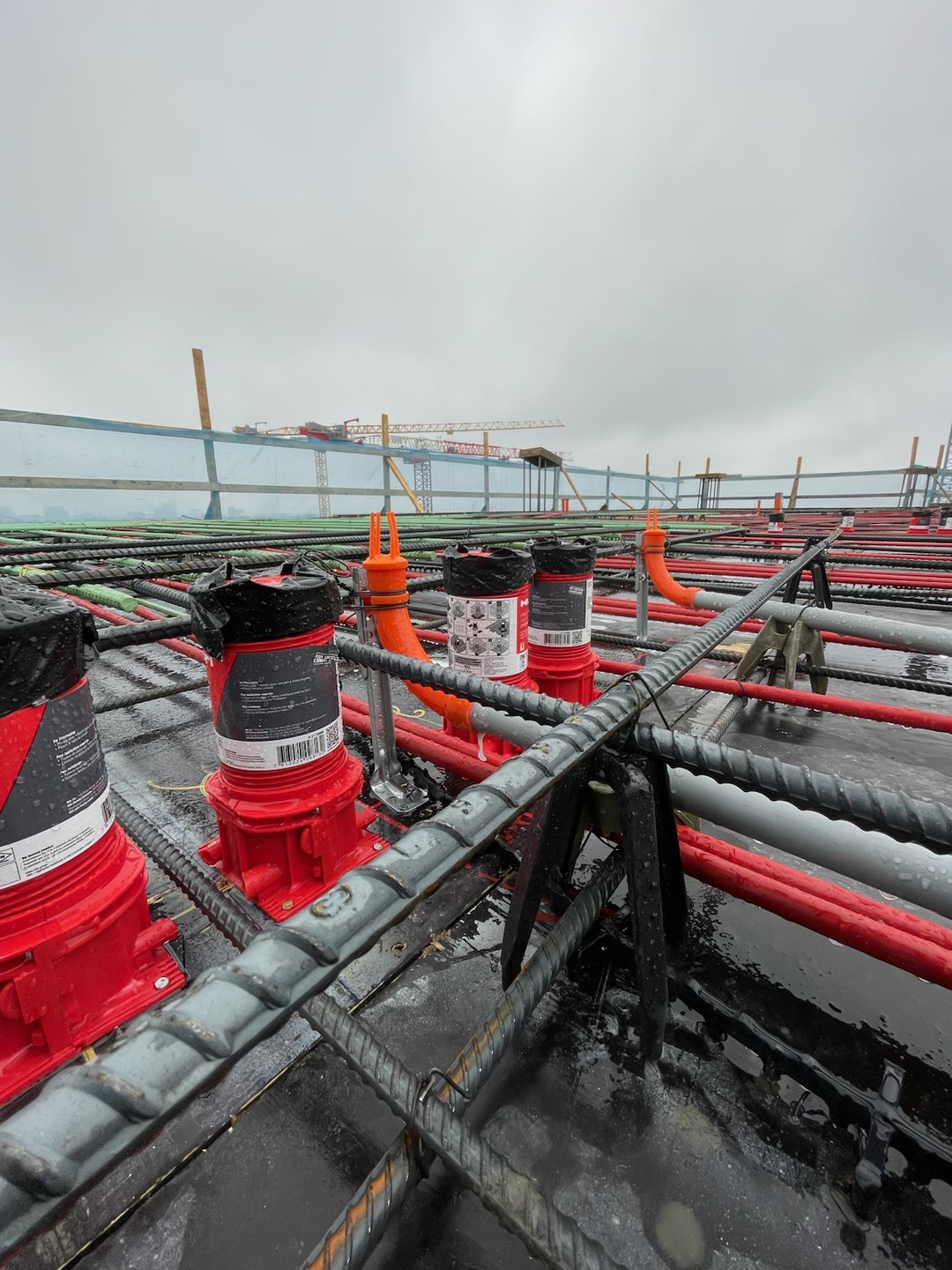
Multiple Stub-EASE II™ units installed across a high-rise rebar deck prior to concrete pour
Stub-EASE II™ system secured among rebar grid on active deck
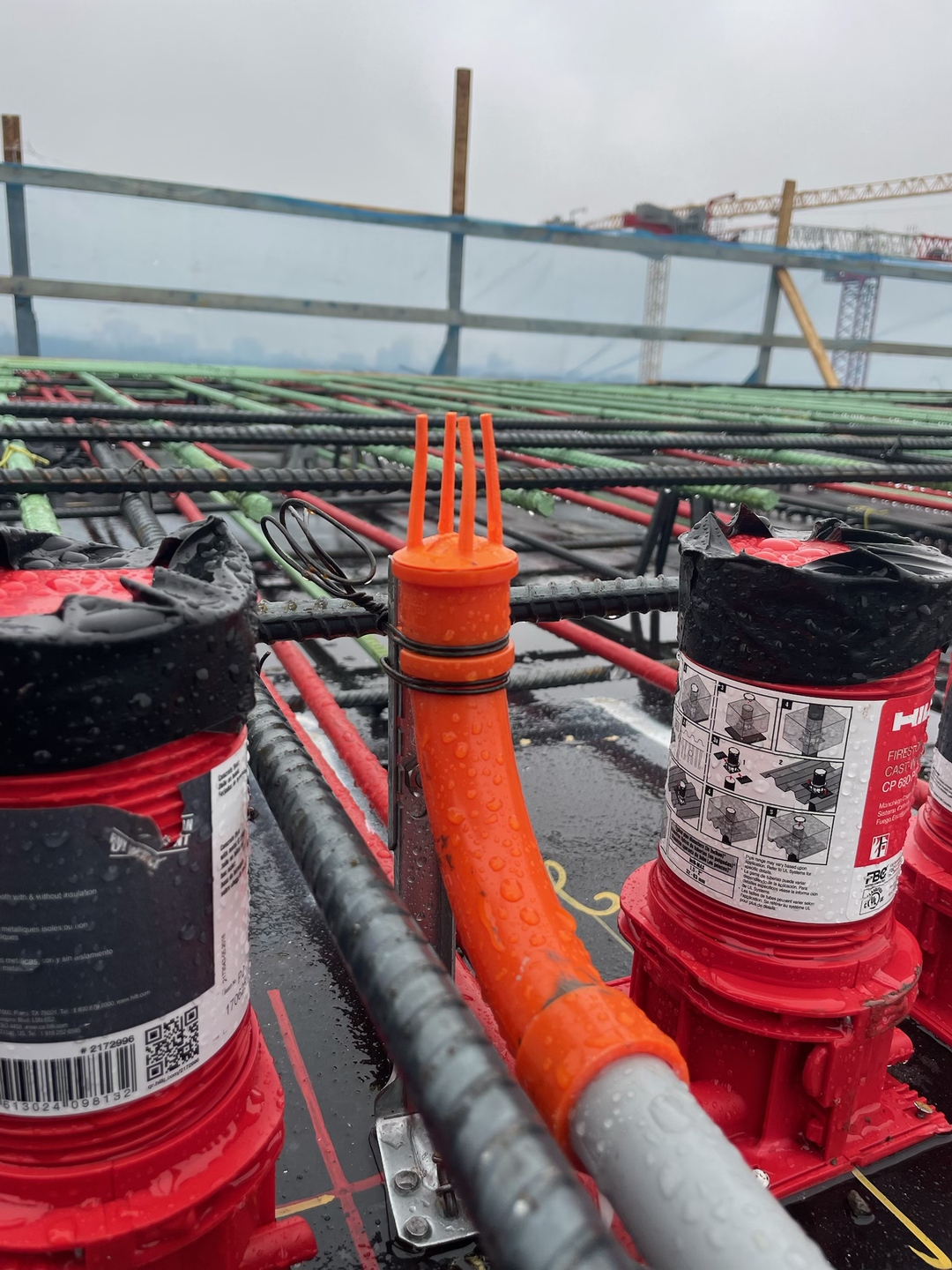
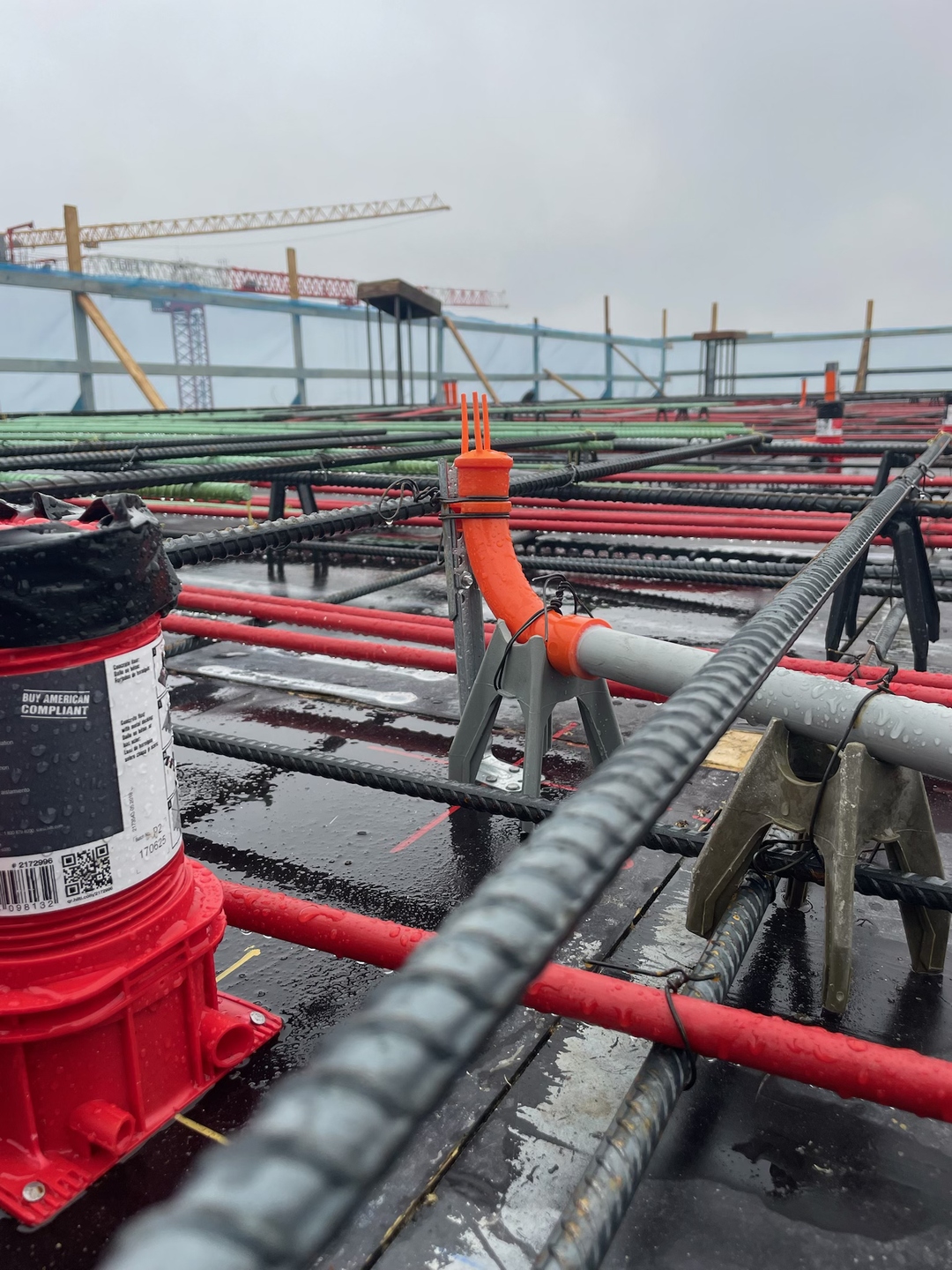
Close view of Stub-EASE II™ cap and Bend-EASE™ elbow installed between rebar on active deck
Product installed on an active high-rise deck — systems secured, caps on, ready for pour.

Conduit stub-ups are not treated as a serious jobsite hazard by most crews — until someone gets hurt. The numbers below are not projections. They are what actually happened on real concrete construction projects, and what NEC 300.15(F) and OSHA require as a result.

The $1.3 Million Settlement

$1.3M+
Litigation Settlement
University Center of Chicago, Turner Construction, 2002–2004

"I was General Superintendent on the University Center of Chicago project for Turner Construction, between 2002 and 2004. A worker tripped on an unprotected conduit stub-up on the slab. It should never have happened, and I was responsible for that job site when it did."

"The litigation that followed settled for over $1.3 million. That incident is the genesis of Stub-EASE™. I did not walk away from it and move on to the next job. I spent the next twenty years figuring out how to make sure it could never happen again."

— Jeff Krause, Founder & Director of Manufacturing and Product Development, CSUE Technologies

OSHA Treats This as a Citable Violation

Unprotected conduit stub-ups on working walking surfaces are a recognized impalement hazard under OSHA's General Duty Clause, Section 5(a)(1) of the OSH Act of 1970. When a worker is exposed to stub-ups between nine and twelve inches above the finished concrete deck, the citation follows — regardless of how long the condition existed.

In a documented high-rise construction inspection in Chicago, an electrical contractor was cited for a Serious violation covering 456 instances of impalement exposure across 50 workers. The initial penalty was $4,000; it settled at $2,400 — but the abatement requirement and case record remain public and permanent.

Stub-EASE II™ eliminates the cited condition before any worker sets foot on the slab. The Stub-EASE II™ cap is in place before the pour — so there is nothing left standing for OSHA to cite, and nothing left for a worker to be impaled on.

OSH Act §5(a)(1) — General Duty Clause
Documented Chicago High-Rise Inspection
456
Instances of impalement exposure cited in a single inspection. 50 workers at risk. Serious violation. Public record.
Violation Type
Serious
Standard Cited
OSH Act §5(a)(1)
Instances
456
Workers Exposed
50
Initial Penalty
$4,000
Industry / Location
Electrical Contractor · Chicago High-Rise

Source: U.S. Department of Labor, OSHA Inspection Record No. 1087741.015, Calumet City Office, August 2015. Public record. Company name withheld.

What Conduit Stub-Ups Actually Cost

Settlements and verdicts from documented conduit stub-up injury cases on commercial construction projects. These are public court records and law firm published outcomes — not estimates.

$2,000,000
+ $330,000 WC lien waiver
Construction worker tripped over a conduit stub-up at a New York City Board of Education school kitchen renovation. Defense argued the stub-up was "integral to construction." Court denied summary judgment. Parties settled.
New York  ·  Trip/fall, conduit stub-up
$2,000,000
 
Electrician, age 42, tripped and fell on stub-ups at the base of a stairway on a New York construction project. Injuries: shoulder surgery and herniated disc at L4-5. Stairway location made the "integral to work" defense difficult to sustain.
New York  ·  Shoulder surgery, herniated disc L4-5
$1,300,000
 
High-rise CCIP project. A colleague injured on a conduit stub-up required multiple surgeries and was permanently unable to return to work. This incident is the direct origin of the Stub-EASE™ product line.
Illinois  ·  CCIP high-rise project
$1,100,000
 
Tradesman tripped and fell over an electrical conduit stub-up during construction of a high-rise building. An unusual density of mechanical stub-ups on the floor was established. Injuries: broken toe and herniated disc, lower back.
High-rise construction  ·  Back and foot injury
$700,000
 
Carpenter tripped over an electrical conduit on a New York construction site, suffering a meniscus injury and aggravation of pre-existing arthritis.
New York  ·  Meniscus, knee
$600,000
 
Construction worker fell over an electrical conduit on an Illinois job site, requiring shoulder surgery. Case proceeded on common-law negligence.
Illinois  ·  Shoulder surgery
Sources: StolzenbergCortelli LLP, Arye Lustig & Sassower P.C., Evan Hughes Law Firm, Grauer & Kriegel LLC, Modern Contractor Solutions (mcsmag.com). All settlements are public record or published case reports. Research compiled June 2026.
Download Safety Positioning Sheet 3-page PDF — OSHA framework, product claim, regulatory context. For specifiers, GCs, and ECs.

The Rework Nobody Budgets For

30–40%
Industry-observed damage rate on unprotected conduit stub-ups during power-trowel finishing. On a floor with 200 stub-ups, that is 60 to 80 conduits that need to be re-worked before an electrician can pull wire.
Step 1

Core drill or chip out the damaged conduit from cured concrete

Step 2

Re-bend or fully replace the damaged conduit run

Step 3

3–6 hours of electrician labor, per stub-up, to make the repair

Step 4

Schedule disruption that ripples into every trade behind the repair crew

NEC 300.15(F) / 300.17(F)

The Code Language That Governs This

NEC 300.15(F) requires that a fitting or connector be used wherever a conductor or cable exits a raceway. The Bend-EASE™ elbow satisfies this requirement as a transition fitting between metallic conduit systems embedded in concrete and PVC conduit systems, designed and tested to meet UL specifications.

The Same Fitting. Any Raceway.

Bend-EASE™ is code-compliant with both metallic (EMT/RMC) and PVC below-slab raceways under NEC 300.15(F) (2023 NEC) / NEC 300.17(F) (2026 NEC). No additional grounding measures are required beyond standard installation practice for the raceway type used. This was confirmed through independent NEC analysis — the elbow adds zero grounding burden in either configuration. One product spec covers the full range of below-slab raceway conditions on any project.

EMT RMC PVC Zero Added Grounding Burden

Built From Materials Chosen for the Jobsite

Every material in the Stub-EASE II™ system was selected for a specific job-site condition — visibility, flexibility under a trowel, or structural support during the pour.

Stub-EASE II™ Cap

  • Aixing TPR, Shore A 45
  • Flexible, non-sparking, non-conductive
  • Pantone 021C orange for high visibility on the job site

Bend-EASE™ Elbow

  • Westlake PVC UV-6676 rigid PVC
  • UV-stabilized for exterior exposure before the pour
  • Designed and tested to meet UL specifications per NEC 300.15(F) / 300.17(F)

Stand-EASE™ Support

  • DC51D+Z80 galvanized steel
  • 0.062" thick
  • Fastens to deck for stability throughout the pour

Download the Submittal Package

Project-Ready Documents — Free Download

Spec sheets, installation guides, and compliance documentation for Stub-EASE II™ — ready for your project file, design team, or safety submittal. No sign-up required.

See What Stub-Ups Are Costing Your Project

Calculate your exposure, then shop the system that eliminates it.